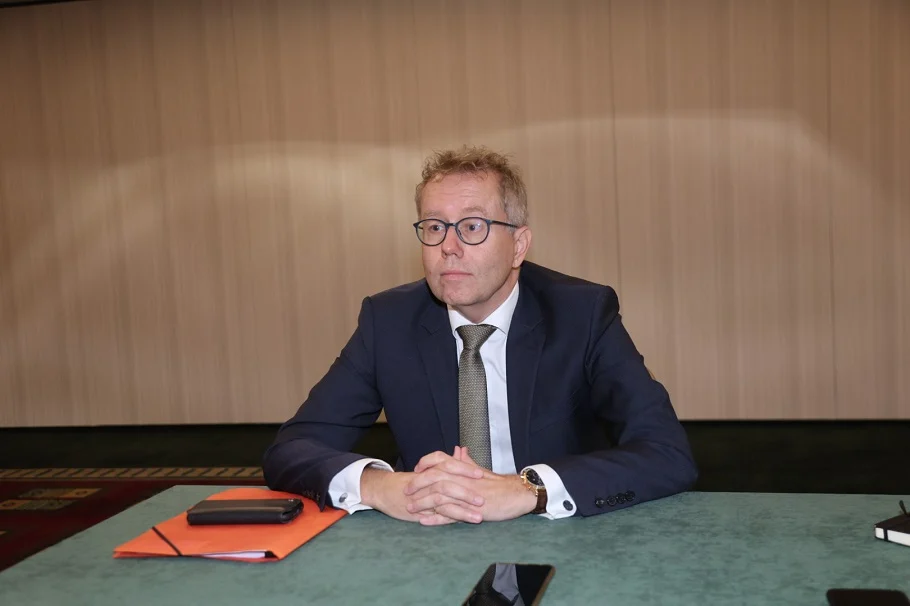
Martin Bijsterbosch – Deputy Head of the Euro Area External Sector Department in the Directorate General for Economics of the European Central Bank with an exclusive interview for banker.bg – Part Two
Do you have an assessment of how the adoption of the euro affected life in Croatia, which, like Bulgaria, had tied the kuna first to the Deutsche mark and then to the Euro for many years?
– Euro adoption has delivered significant benefits for Croatia. Eliminating exchange rate risk has simplified cross-border trade, investment, and borrowing, while reducing sovereign borrowing costs by removing currency risk for euro-denominated debt. Croatia has also deepened its integration into the euro area economy, boosting trade and investment flows. The tourism sector has particularly benefited from the absence of conversion costs and improved price transparency for visitors.
Notably, Croatia’s real GDP per capita, a key indicator of average income, has risen from 68% of the euro area average in 2022, the year before euro adoption, to a projected 78% this year (adjusted for price differences).2 While this strong increase reflects multiple factors, euro adoption has certainly played a supportive role. Croatia did experience a moderate, one-off rise in consumer prices immediately after the changeover, but the impact was limited.3 Croatia’s experience offers valuable insights for Bulgaria, though it’s important to recognise that the most significant benefits of euro adoption are realised over the medium term.
Would you share, advise, encourage or wish something to Bulgarian citizens after our country enters the eurozone?
– As a European, I am inspired by Bulgaria’s commitment to this historic step. From the lev’s early peg to the French Franc in the 19th century to its fixed exchange rate to the German Mark and later to the euro since the end of the 20th century, Bulgaria has always looked toward Europe in its economic journey. By adopting the euro, Bulgaria is not merely following tradition—it is building on it, securing a stronger, more integrated future at the heart of Europe.
I firmly believe Bulgaria can thrive in the euro area, provided it pursues the necessary economic policies and reforms. These include maintaining fiscal discipline, protecting financial stability, and advancing structural reforms to strengthen governance, invest in education and innovation, and address demographic challenges.
Do you think that the political instability in Bulgaria will in any way affect our position in the eurozone?
– Political stability is crucial for any country. Participation in the euro area requires a commitment to structural reforms and policies that ensure competitiveness, fiscal discipline, and economic resilience. Political instability can hinder these efforts by delaying or complicating decision-making. With improved political stability, Bulgaria will be better positioned to fully capitalise on the economic and financial benefits of the euro, supporting sustainable growth and deeper integration within the euro area.
––––––––––––––––––––––––––––––––––––––––––––––––––––––––––––––––––––––––––––––––––––––––––––
2. Projection by the European Commission, Autumn 2025 Economic Forecast, November 2025.
3. See M. Falagiarda, C. Gartner et al, Has the euro changeover really caused extra inflation in Croatia?, ECB blog 7 March 2023.
Източник: Banker.bg